
Early access
Schedule research sessions without the back-and-forth
Share a booking link, and participants pick a time that works. Invites, reminders, and consent are handled for you.
We will talk through how to set your team up.
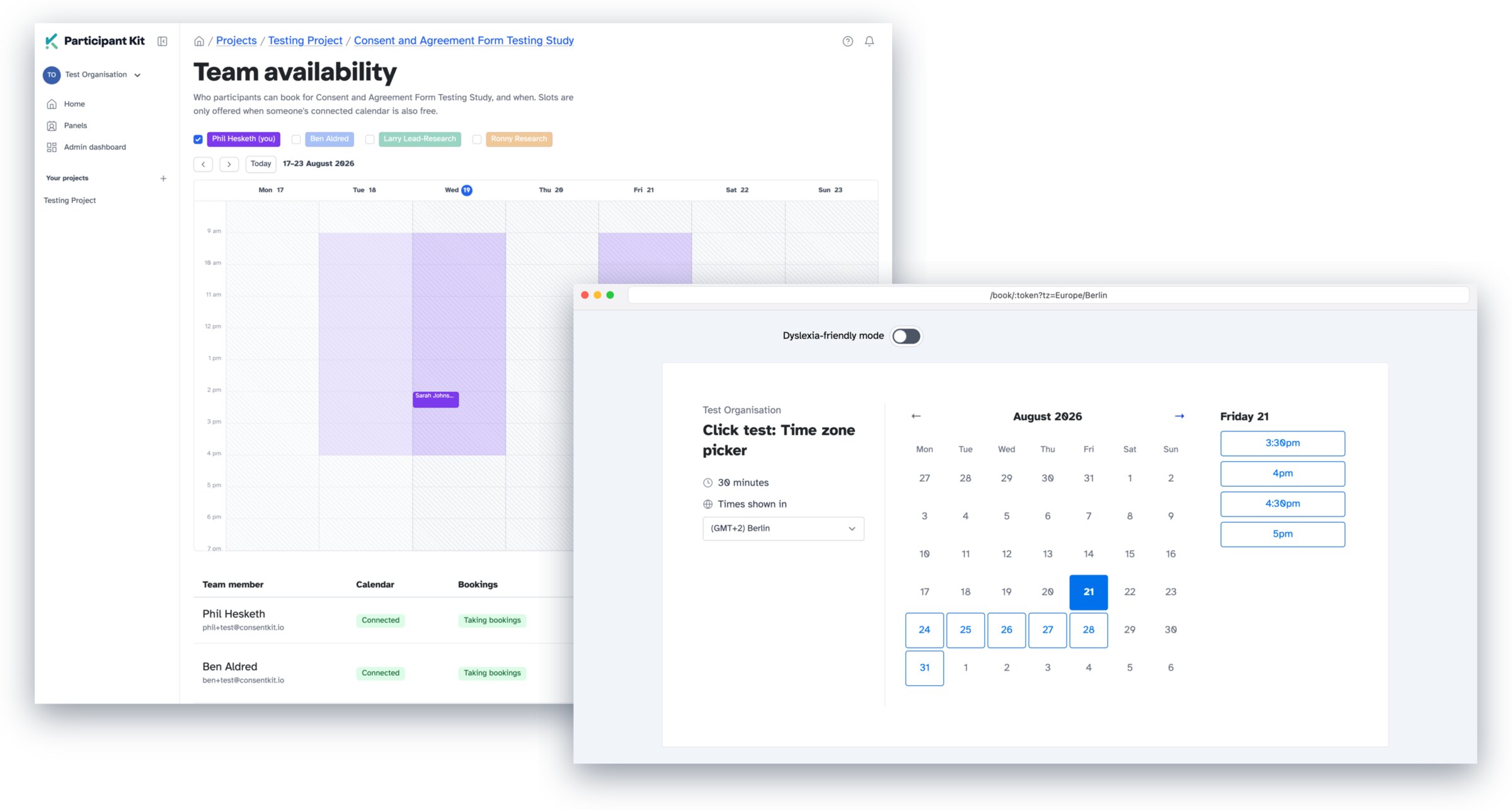
The platform User Research teams trust for ethical and efficient research





No-shows start long before the session
-
Six emails deep
- and still no time that works?
-
Screened in one tool
- consented in another, booked in a third?
-
Chasing a signature
- five minutes before the call?
Every handover between tools is somewhere to lose someone.
From screened to booked, on autopilot
So we took the joins out. One flow, start to finish, with nobody dropping through the gaps.
-
1
They pass your screener
The right people carry straight through. Nothing to export, nothing to copy across.
-
2
They give consent
A real consent form. Accessible, multilingual, signed before anything is booked.
-
3
They pick a time
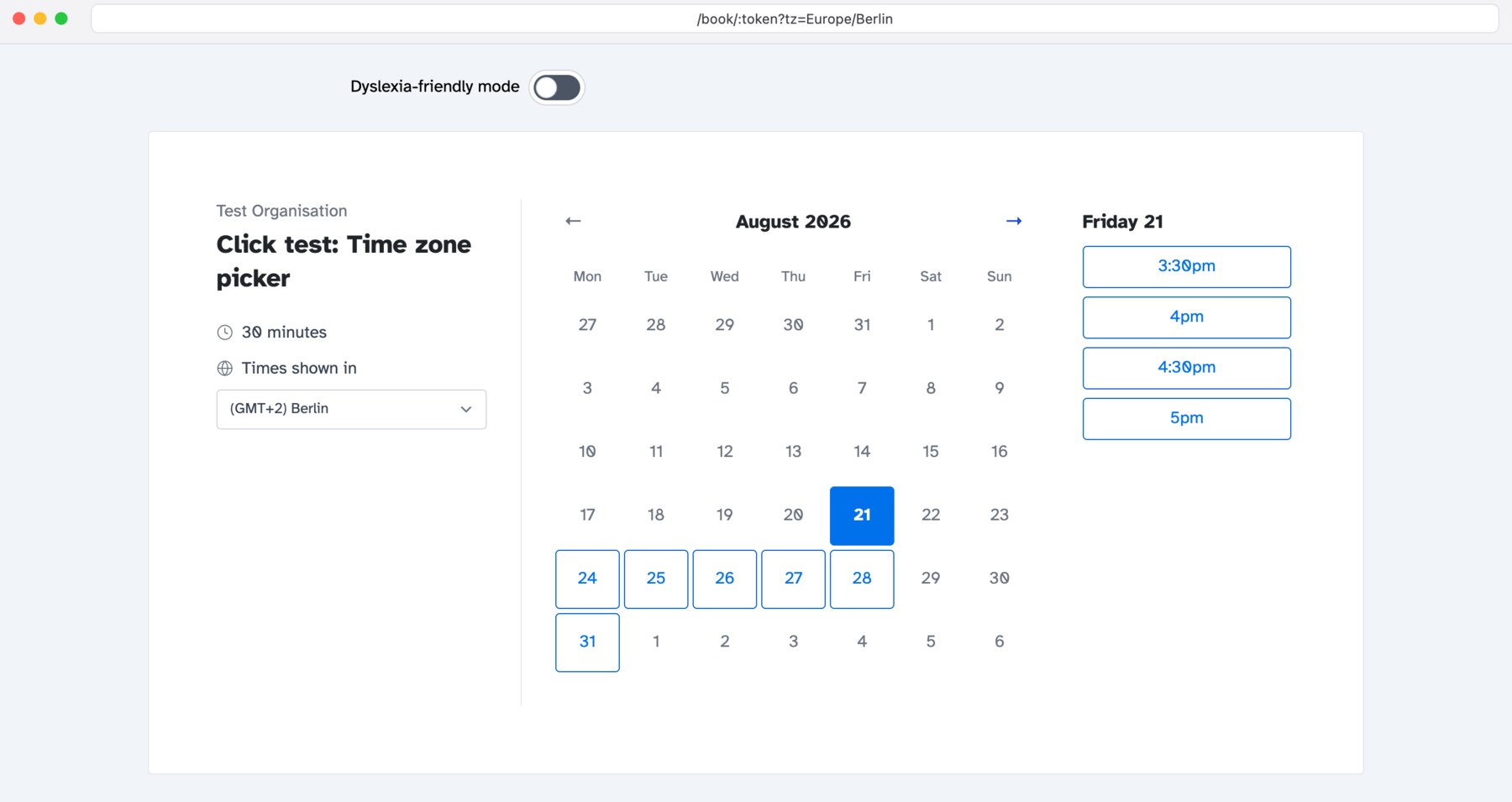
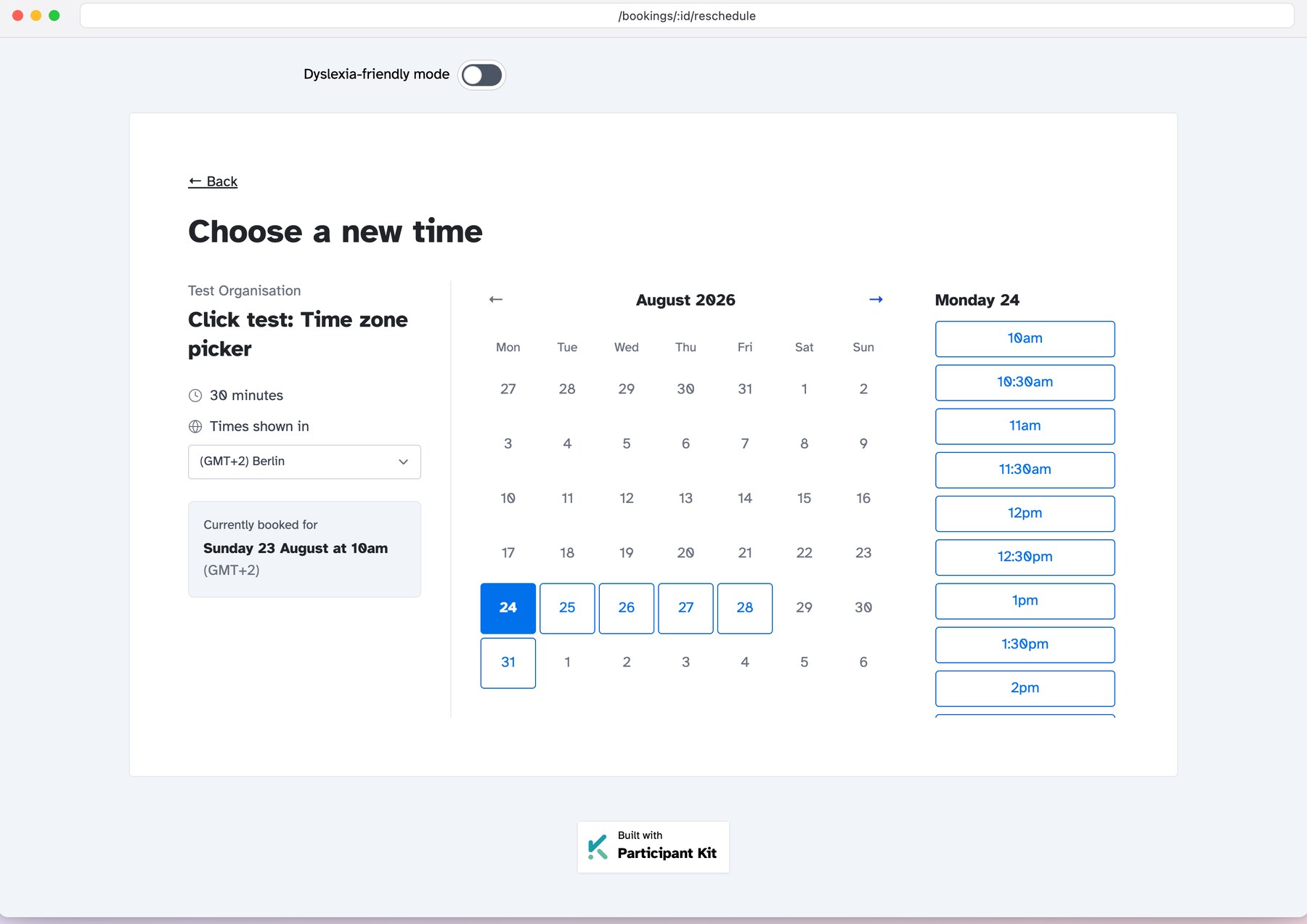
From your real availability, shown in their own time zone.
-
4
It lands in both diaries
Yours and theirs, with the video link attached and the whole thing kept against the participant.
How it works
A booking link built for research
Participants choose from your real availability. No email tennis. No spreadsheets.
- Each study gets its own booking page, on a link you can send anywhere
- Send it in an invite, at the end of a screener, or straight after the consent form
- Availability comes from your connected calendar and the hours you set for the study, so participants only ever see times you can genuinely do
-
Reminders
A nudge before the session, so people turn up.
-
Reschedule and cancel
Participants sort it themselves, from the link they booked with. Your dashboard keeps up without you.
-
Accessible as standard
WCAG 2.2 AA, like the rest of the participant experience. Screen readers, magnification, dyslexia friendly.
Works with the calendar you already use
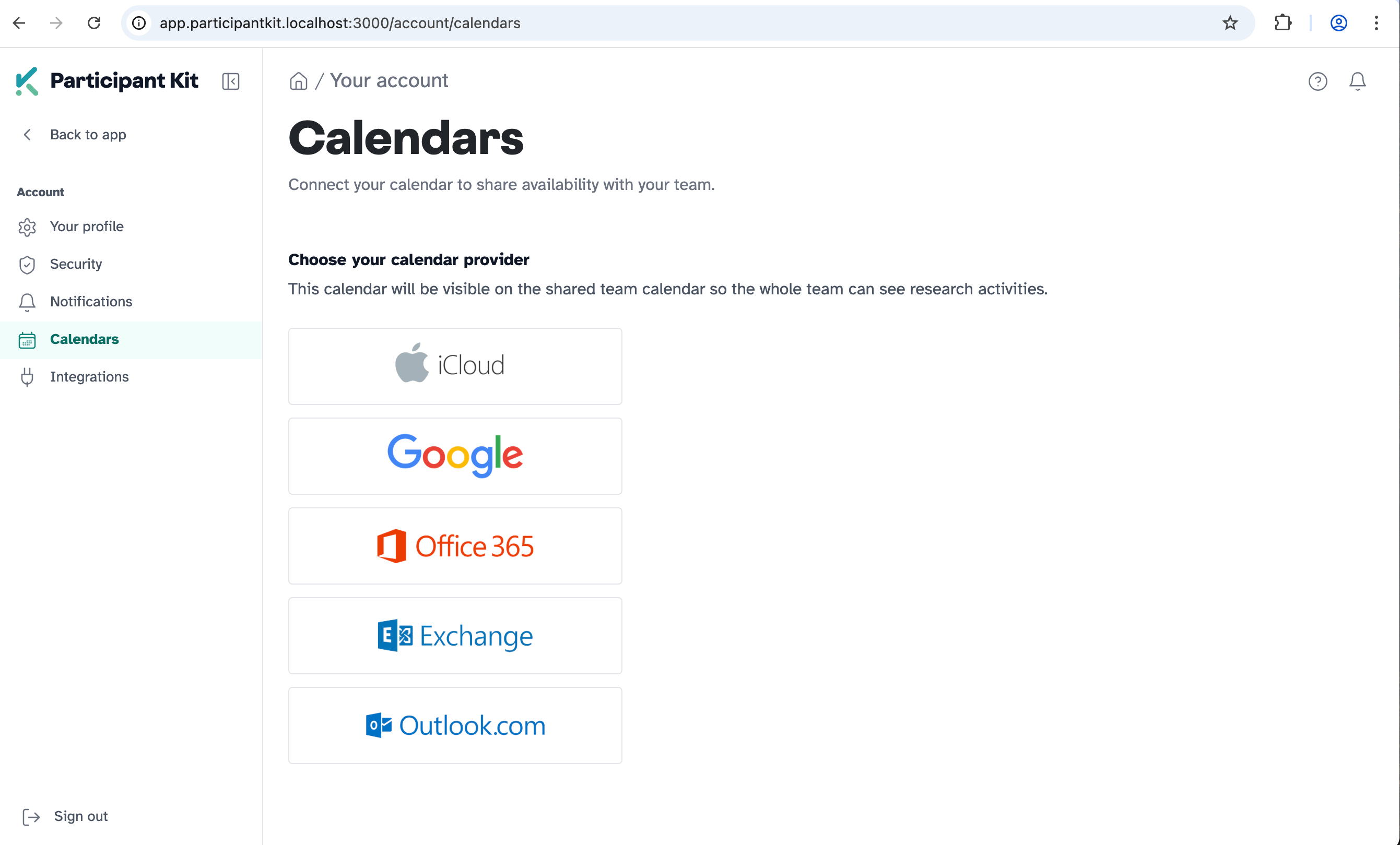
Connect Google, Microsoft 365, Outlook, Exchange or iCloud. Your calendar stays in sync, so nobody gets double booked, and every session lands in the diary with a Google Meet or Teams link attached.


Research is a team sport
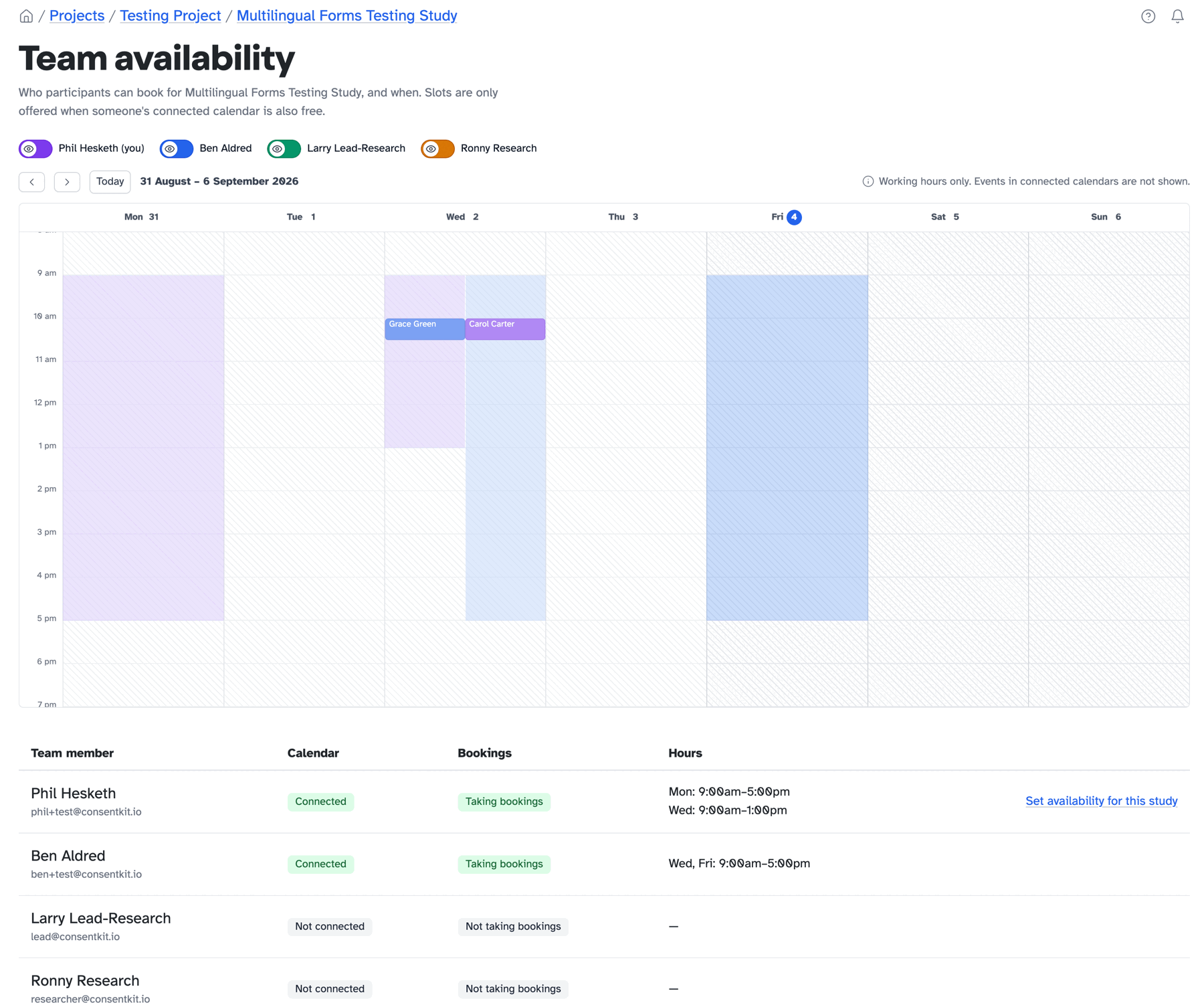
Everyone on the study connects their own calendar and sets their own hours.
- Availability works itself out across the whole team, so nobody sits comparing diaries
- Everyone keeps their own working hours, so one person's day off doesn't hold up the study
- See who is taking bookings, and when, in one place
-
Round robin
Share the load across your team. Bookings go to whoever is free.
-
Buffers and notice periods
Protect your prep and wrap-up time. Stop anyone booking you in ten minutes' time.
-
One shared research calendar
Every session, across every study, in one place your stakeholders can see.
Our scheduling knows you're running a study
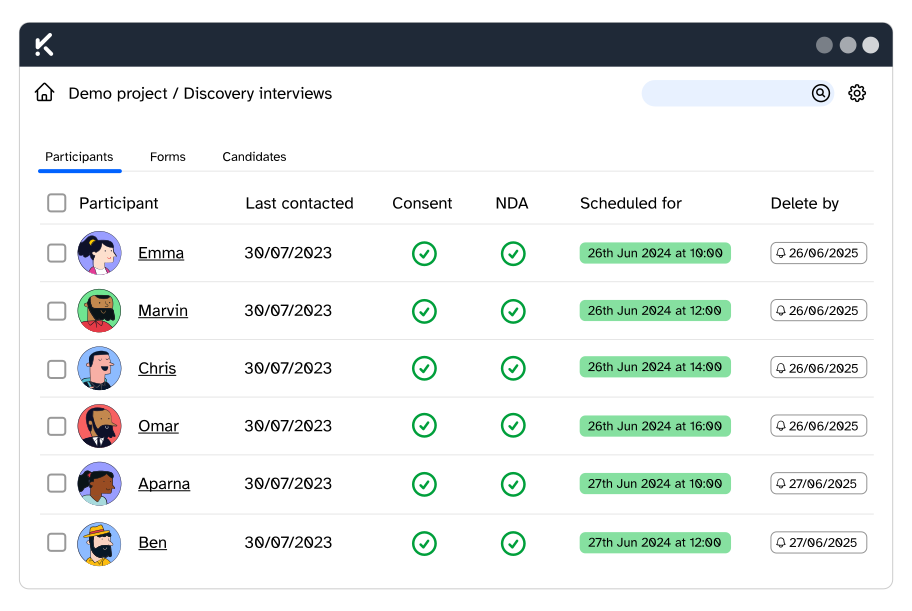
Booking here is wired into the screener, the consent form and the participant record, because it is all the same system.
- You can require a signed consent form before anyone books a slot, on the studies where that matters
- Booking stops on its own once the study is full
- The right people carry through from your screener, with nothing to type in twice
-
Consent before booking
Switch it on per study. No more chasing a signature five minutes before the call.
-
Participant quotas
Cap how many sessions you take, so booking stops when you have enough.
-
Straight from your screener
The people who qualify carry through to booking on their own.
Built for research across borders
A study run out of the EU means participants in different countries, in different time zones, speaking different languages.
- Everyone sees times where they are. Nobody does the maths, and nobody turns up an hour late
- People book in the language they are most comfortable in, the same as your consent forms
Want to see it running on one of your own studies?
A short call, and we will set your team up.
It isn't another tool. It's the one you already have.
Book with a generic tool and you take on a vendor. Another agreement to sign, another sub-processor on your list, another place your participants' data ends up. Usually in the US.
Scheduling in Participant Kit is just Participant Kit. The booking sits with the participant record, the study and the consent form, under the agreement you already have with us.
- No extra vendor
- No extra sub-processor
- EU data residency
- One agreement
Research scheduling vs a generic booking tool
Both put a link in front of a participant. The difference is everything either side of the booking.
| With a generic booking tool... | With Participant Kit |
|---|---|
|
The booking is a calendar event, attached to nothing
|
Every booking lands on the participant's record, with their consent form and their history
|
|
Your study only knows what you remember to type into it
|
Your study updates itself as sessions are booked, moved and cancelled
|
|
Nothing sets it off. You send the link yourself, every time
|
Booking fires off the back of a screener, or off the back of a signed consent form
|
|
No idea whether anyone has consented
|
Require consent first, so nobody books a slot until they have signed
|
|
Happily books the same person you interviewed last month
|
Tracks who is already booked in, so the same few people don't end up in every study
|
Early access is open
We are inviting research teams in small groups. Book a short call and we will switch bookings on for your organisation.