
Set retention periods for your forms
Consent and agreement forms tell people how long you’ll keep their data. That’s the form’s retention period.
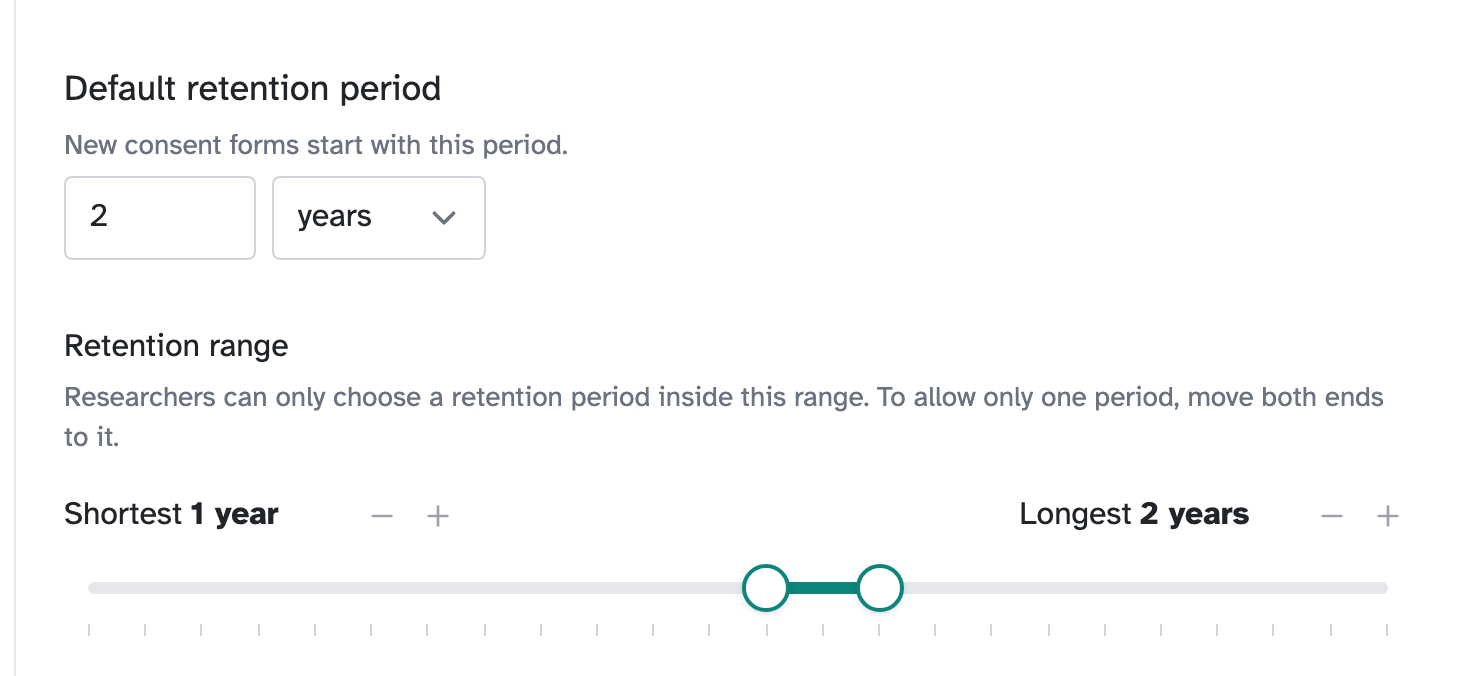
As an admin, you can set the period new forms start with. You can also set a range, so every form’s period stays within your policy.
For help working out how long you need to keep data for, try running our Research Data Discovery Workshop with your team.
Who can use this
Only organisation admins can change the default period and the range. Researchers can still change the period on their own study’s forms, within your range.
Set your default retention period
- Click your organisation’s name at the top of the sidebar, then click Settings
- Under Default retention period, enter a number and choose days, weeks, months or years
- Click Save changes
Changing the default doesn’t change existing forms or templates. Each one keeps the period it already has.
Limit the periods researchers can choose
- On the same Settings page, find Retention range
- Move the Shortest and Longest ends to the periods your policy allows. To allow only one period, move both ends to it
- Click Save changes
When you change the range, we highlight any templates and forms outside it. You can correct each one in place.
Your default period has to sit inside the range too. If it doesn’t, the settings page won’t save.
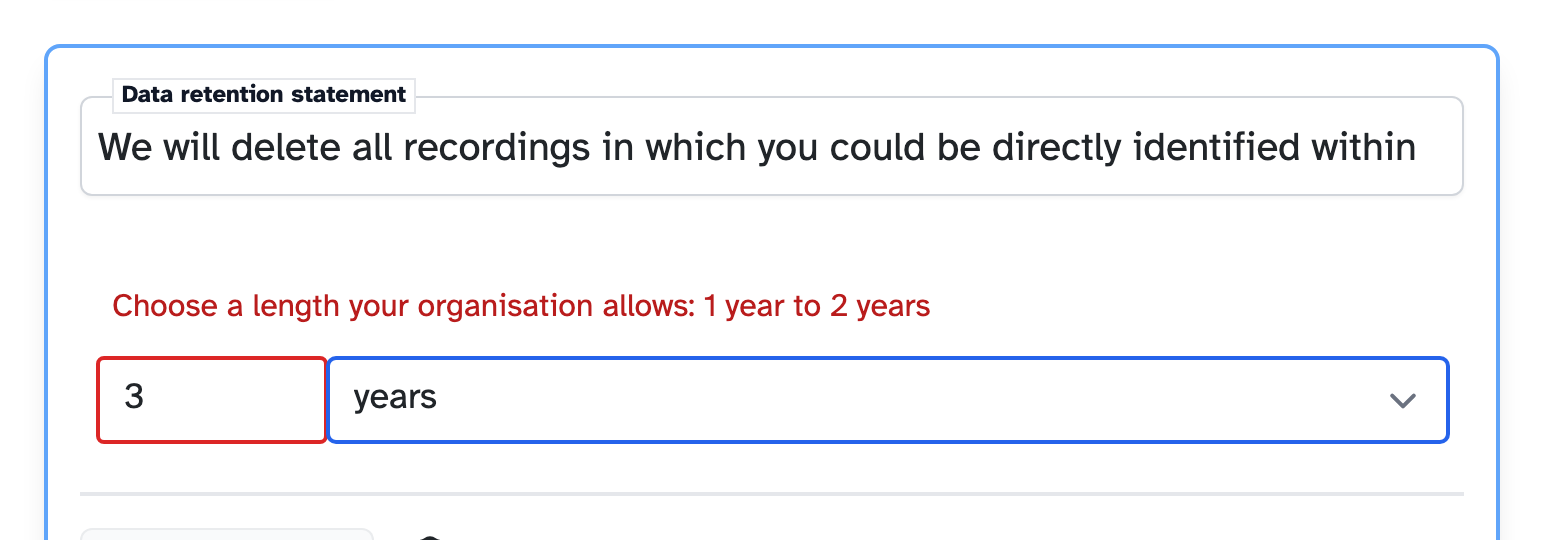
If a researcher chooses a period outside the range, the form builder tells them what your organisation allows.
Where we use the retention period
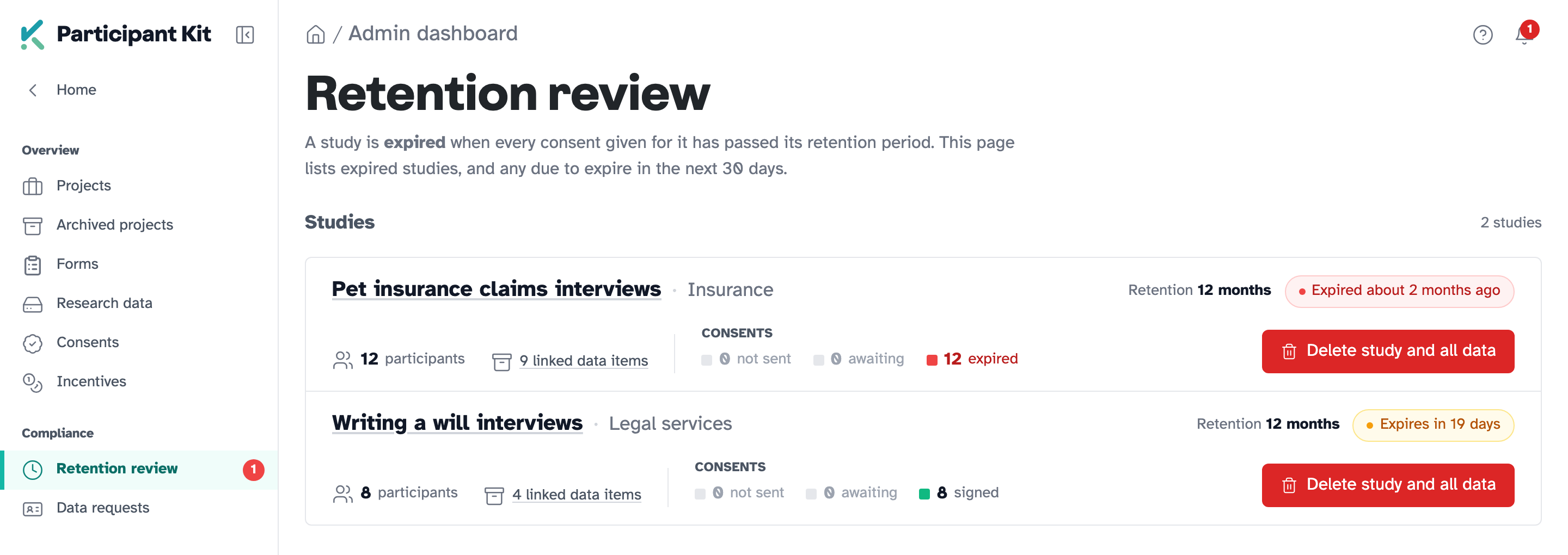
- Retention review lists studies whose consents have passed their retention period, so you can see what’s out of date
- Linked data: when you link a recording or other research data to someone’s consent, we remind you to review it when their consent’s retention period ends
Key takeaways
- Remember: changing the default doesn’t change existing forms or templates
- Watch for: highlighted templates. Researchers start new forms from them, so fix those first
- Quick tip: periods are compared as real lengths of time. A longest of 90 days won’t allow 3 months, because 3 months is slightly longer